7 Ways AI is Revolutionizing Modern Healthcare
1. Advanced Medical Imaging and Diagnostics
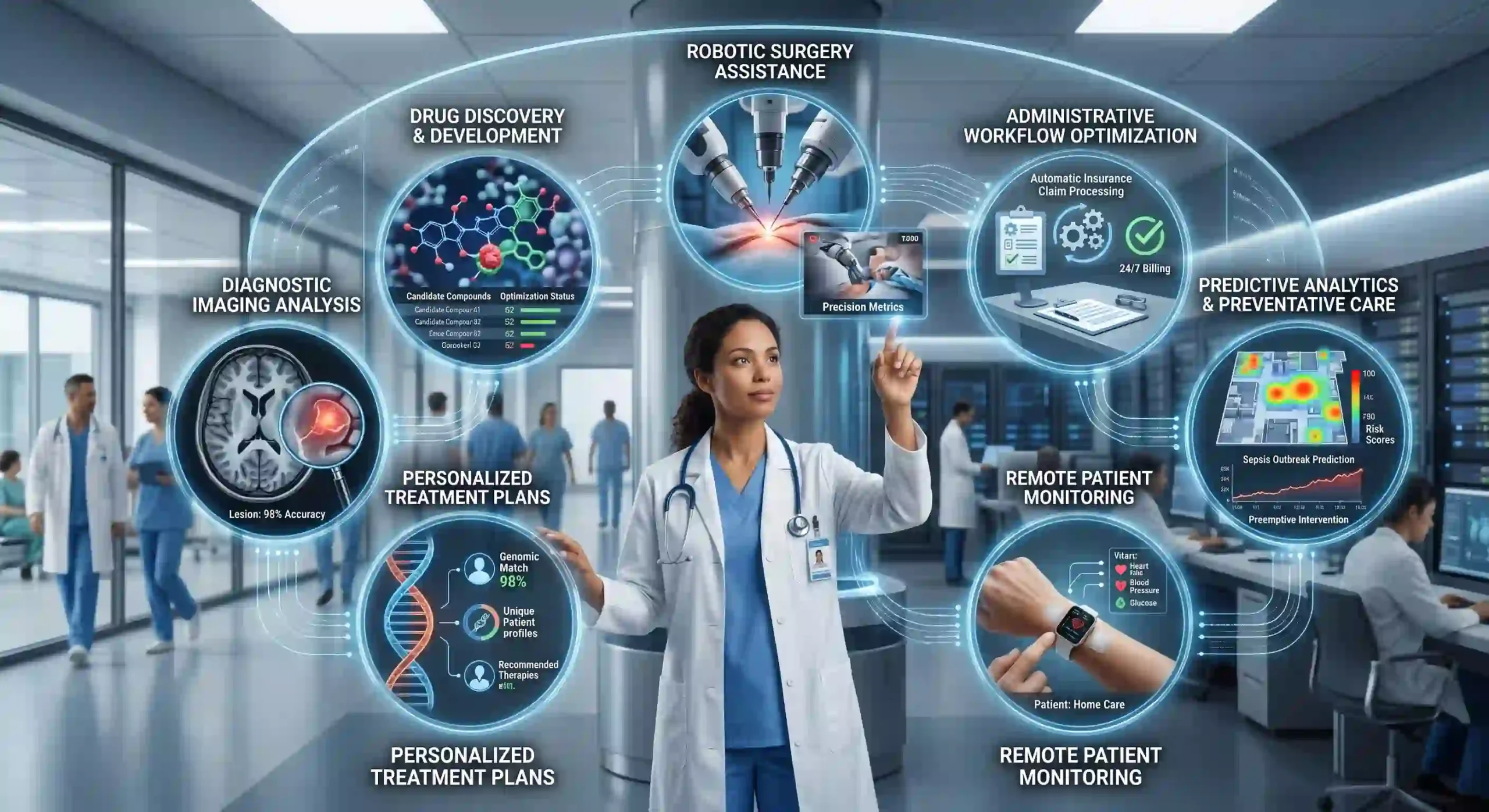
Perhaps the most mature and impactful application of AI today is in radiology and medical imaging. AI algorithms, particularly those using computer vision, have proven incredibly adept at analyzing scans such as CTs, MRIs, and X-rays with astonishing accuracy.
Traditionally, radiologists spend countless hours interpreting these complex images. Subtle anomalies can be difficult to spot, leading to missed diagnoses or delays. AI models, trained on millions of annotated images, can instantly flag potential issues, serving as a powerful second set of eyes.
For example, AI is now frequently used to:
- Detect Early Signs of Cancer: Algorithms can spot tiny pulmonary nodules in lung CTs or early-stage breast cancer in mammograms that might escape human observation.
- Identify Neurological Events: AI can rapidly detect brain hemorrhages, stroke signs, or aneurysms, allowing for immediate life-saving intervention.
- Score Cardiovascular Disease: Models can calculate coronary artery calcium scores from standard chest CTs, providing an objective measure of heart disease risk.
By accelerating the analysis and enhancing diagnostic accuracy, AI is ensuring that patients receive timely interventions when treatment is most effective.