7 Ways AI is Revolutionizing Modern Healthcare
2. Accelerating Drug Discovery and Development
The conventional path of drug discovery is notoriously slow, expensive, and risky. It can take over a decade and billions of dollars to bring a single new drug to market, with countless candidates failing along the way. AI is fundamental shifting this dynamic.
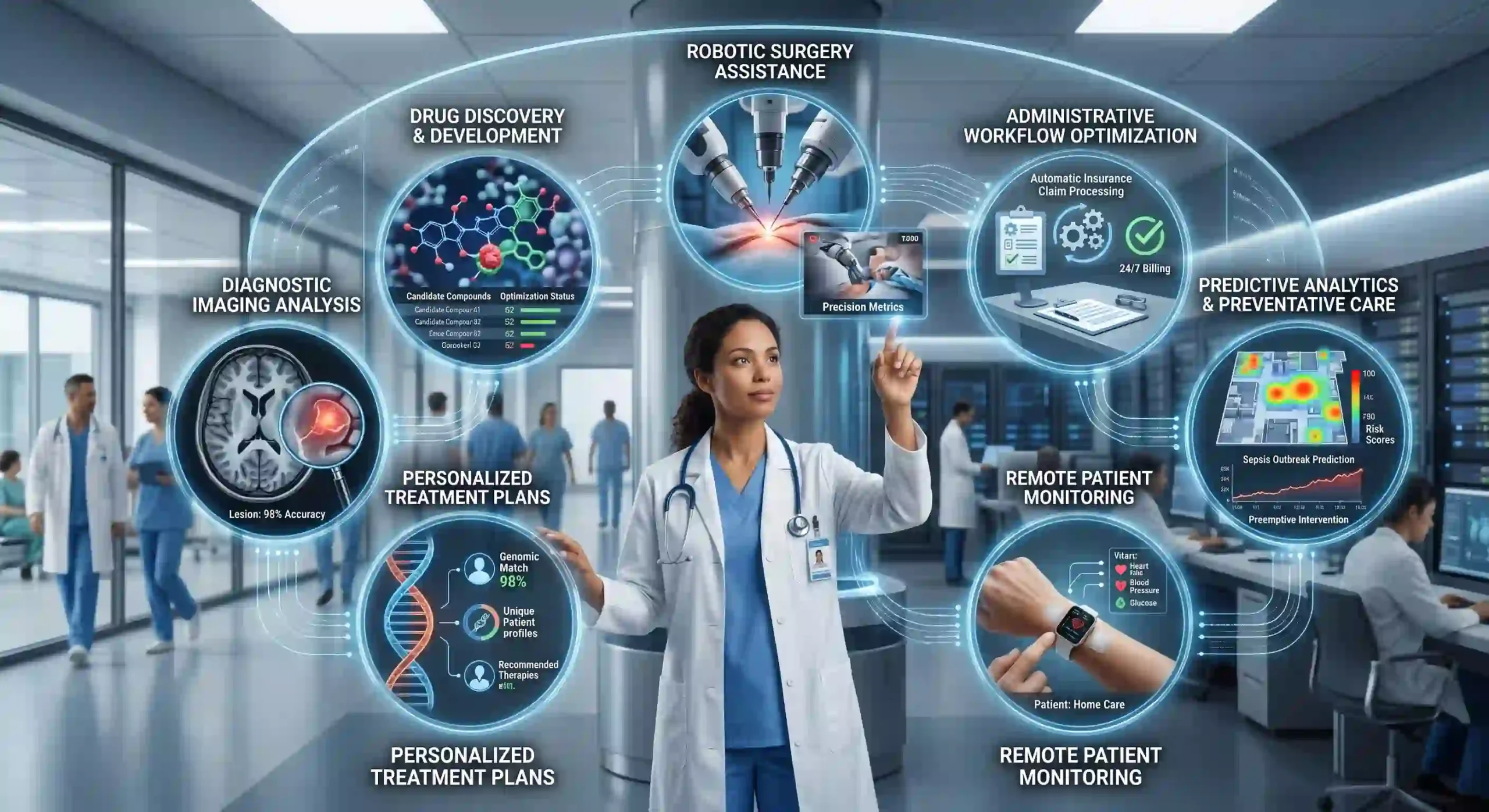
AI is turning drug discovery from a laboratory-based trial-and-error process into a data-driven simulation science. Instead of physically testing millions of molecular interactions, researchers can now use machine learning to simulate these interactions virtually.
Here’s how AI is accelerating the pipeline:
- Target Identification: AI analyzes vast biomedical datasets—including genomics, proteomics, and literature—to identify biological pathways that cause disease and pinpoint potential drug targets.
- Virtual Screening: Researchers use AI to “virtually screen” libraries of billions of known or theoretical compounds, predicting which molecules are most likely to bind successfully to the identified target.
- Predicting Toxicity: One of the main reasons drugs fail in human trials is unforeseen toxicity. AI models can predict potential side effects and safety issues before human trials begin, significantly reducing failure rates.
During the COVID-19 pandemic, AI played a crucial role in rapidly identifying existing drugs that could be repurposed for treatment, and it is now being applied to battle antibiotic resistance and design novel proteins.