7 Ways AI is Revolutionizing Modern Healthcare
6. Utilizing Predictive Analytics for Proactive Care
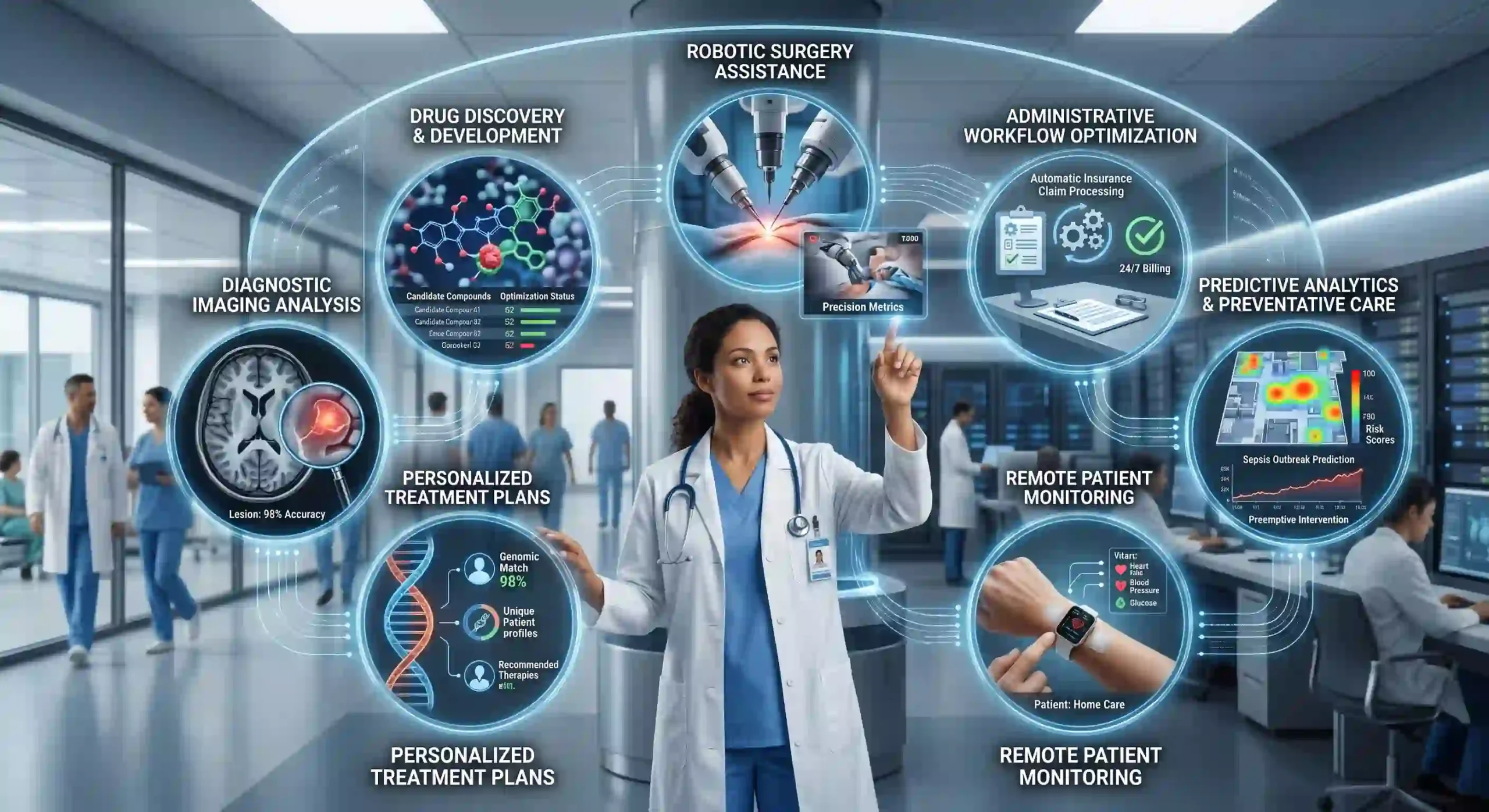
One of healthcare’s greatest challenges is that we often operate in a reactive mode: we treat illnesses after symptoms become severe enough to require an ER visit or hospitalization. Predictive analytics, powered by AI, seeks to change this by forecasting health events before they occur.
AI is uniquely equipped to identify these predictive signals because they are often buried deep within diverse datasets (medical history, recent vitals, lab results, and socioeconomic data).
Hospital systems are now deploying AI models to:
- Prevent Hospital-Acquired Infections (HAIs): AI can analyze real-time EHR data to identify patients at high risk of developing sepsis or C. difficile infections, allowing staff to initiate preemptive protective measures or targeted treatments.
- Reduce Readmission Rates: When a patient is discharged, AI can calculate their specific risk of being readmitted within 30 days based on their medical complexity, home support system, and historical trends. This allows discharge planners to prioritize high-risk patients for intensive follow-up care.
- Population Health Management: Public health officials use AI to analyze population-level data (social determinants of health) to predict disease outbreaks, allocate resources proactively to vulnerable communities, or design targeted preventative care programs.
This shift from episodic treatment to predictive prevention is essential for improving long-term public health and managing the rising costs of healthcare.