7 Ways AI is Revolutionizing Modern Healthcare
3. The Shift to Personalized (Precision) Medicine
For decades, medicine often relied on a one-size-fits-all approach. If two patients have the same disease, they often received the same standard treatment. However, variability in genetics, environment, and lifestyle means that one patient might respond wonderfully, while another might experience severe side effects or no response at all.
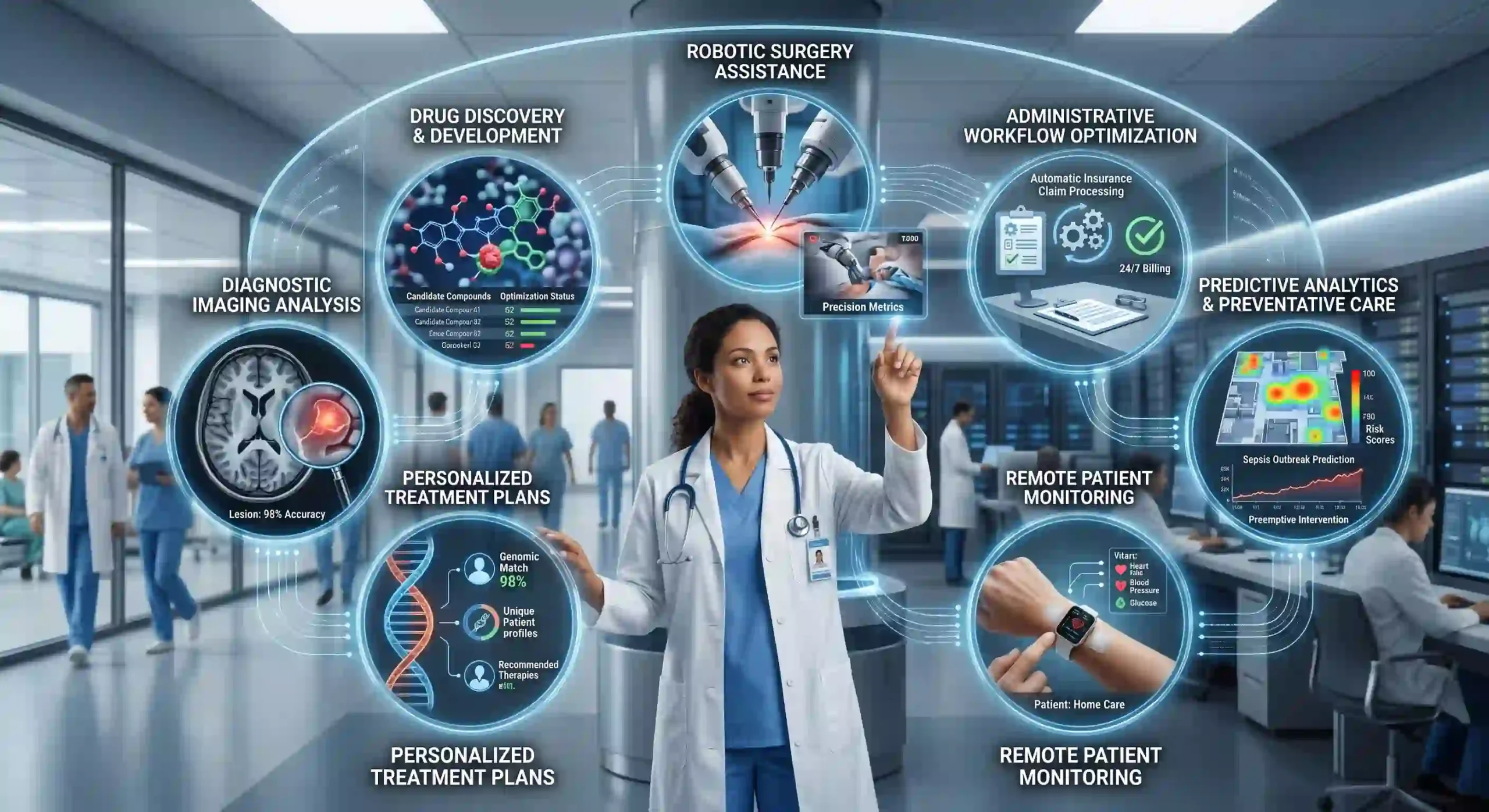
Personalized medicine (also known as precision medicine) aims to tailor treatment to the unique characteristics of each individual. AI is the critical technology enabling this shift.
AI can ingest and synthesize an enormous array of patient data, including:
- Genomic Sequencing: Analyzing the 3 billion base pairs of a patient’s DNA to identify specific mutations that might drive disease or affect drug metabolism.
- Electronic Health Records (EHRs): Integrating historical medical history, family history, lifestyle factors, and lab results.
- Real-time Wearable Data: Incorporating objective behavioral data from sensors.
By applying machine learning to this personalized dataset, AI can predict how an individual will respond to specific therapies, allowing oncologists, for example, to select the precise combination of drugs most likely to shrink a specific tumor while minimizing harm to the patient.